Regeneratively Produced 100% Grass Fed Lamb
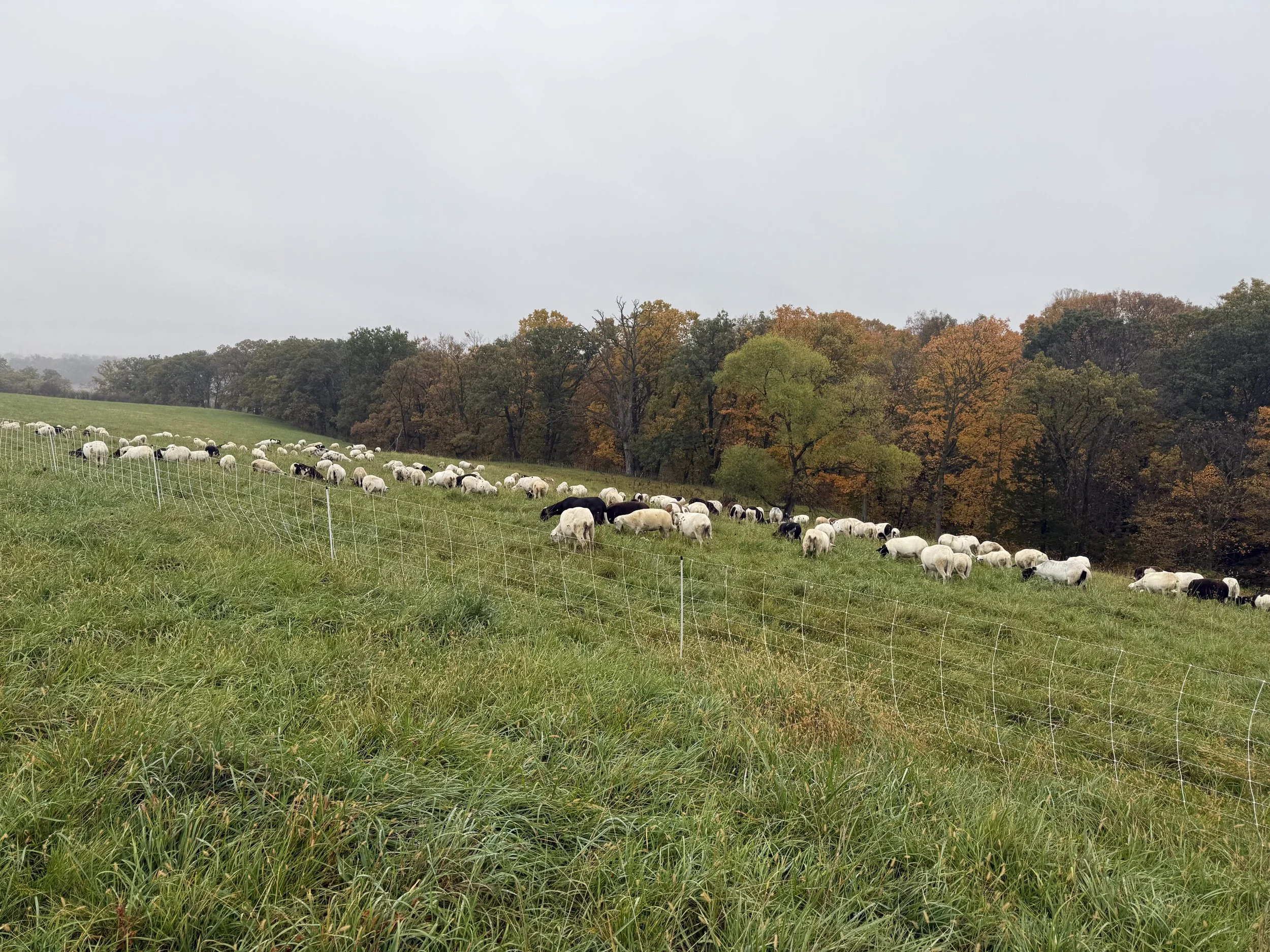
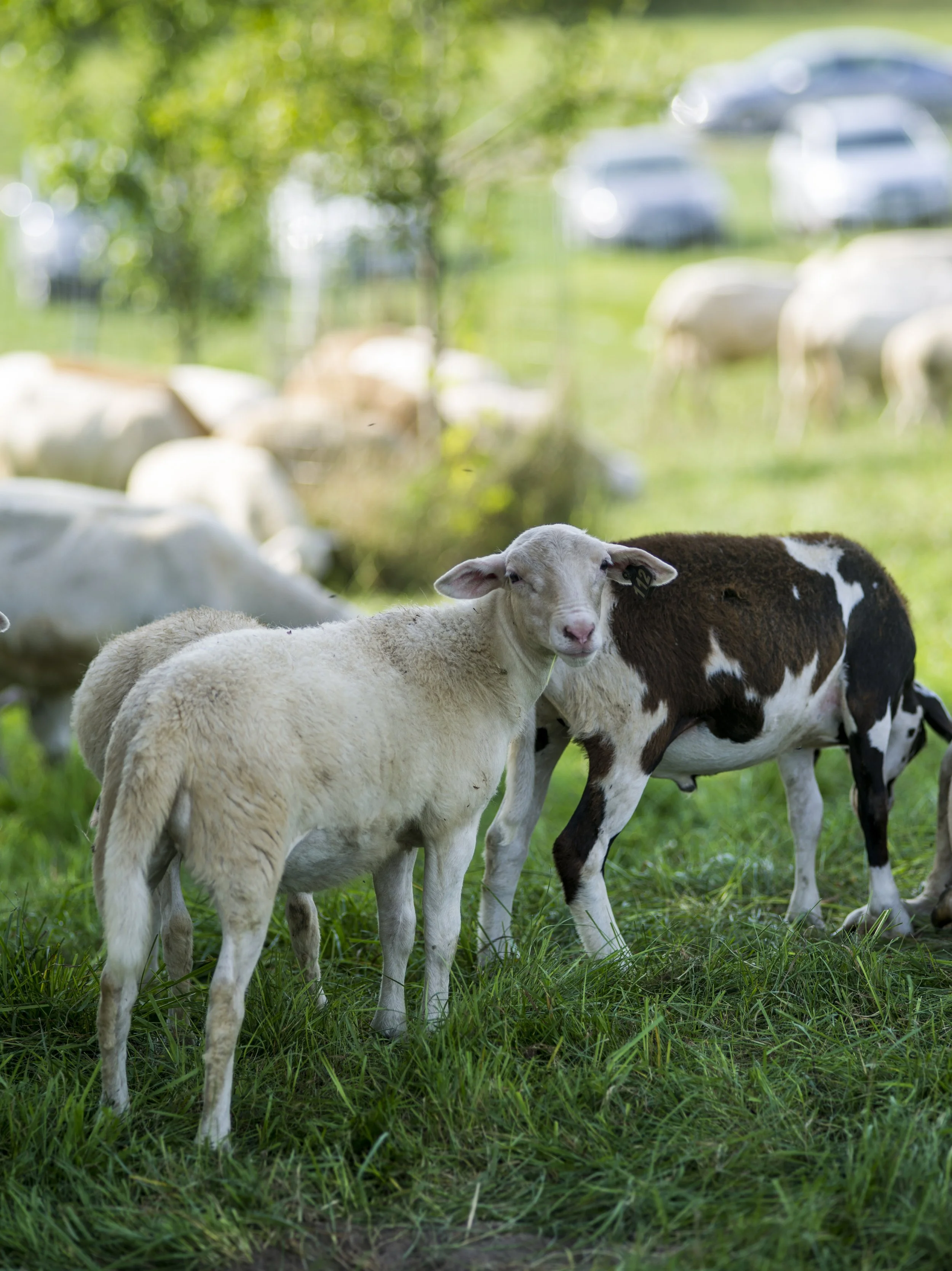
Over the nearly 20 years we’ve been raising sheep, we have refined our practices of producing grass finished lamb. Our lambs are born on pasture in the spring and spend their entire lives outside, grazing sweet forages on our small farm.
OUR PRACTICES

PASTURE BORN AND RAISED
Our lambs are born on pasture in May. During lambing season we give the ewes (mama sheep) a bigger pasture than usual so they have the opportunity to find a comfortable and safe space to give birth and bond with their lamb(s).
LOCALLY FED
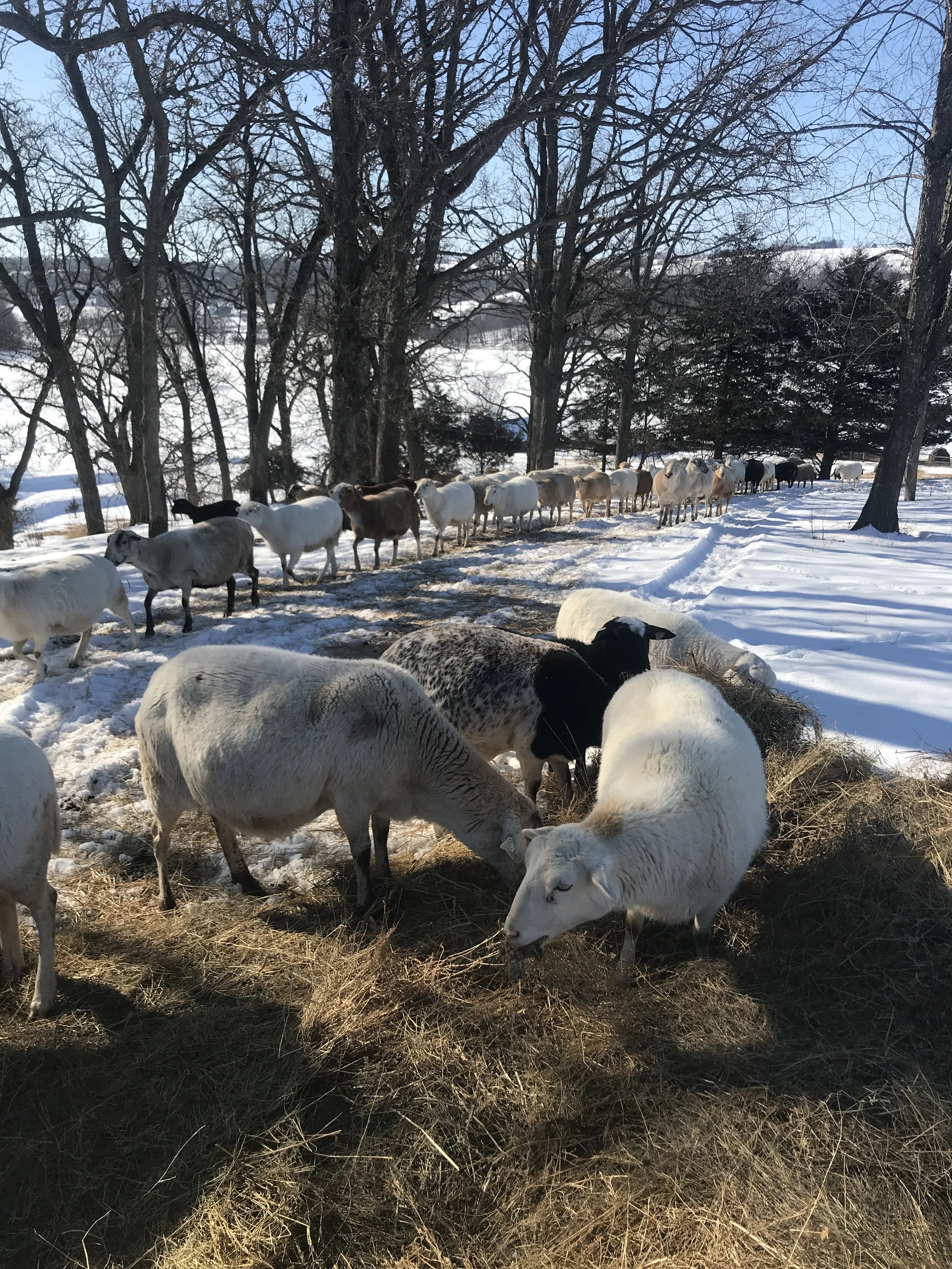
In the summer we move the sheep to fresh pasture daily. In the winter our animals eat hay consisting of forages like orchard, timothy, alfalfa, red clover, Italian rye grass and brome. We produce all of the hay that our sheep eat so I guess you could say they eat locally!
MILD FLAVOR PROFILE
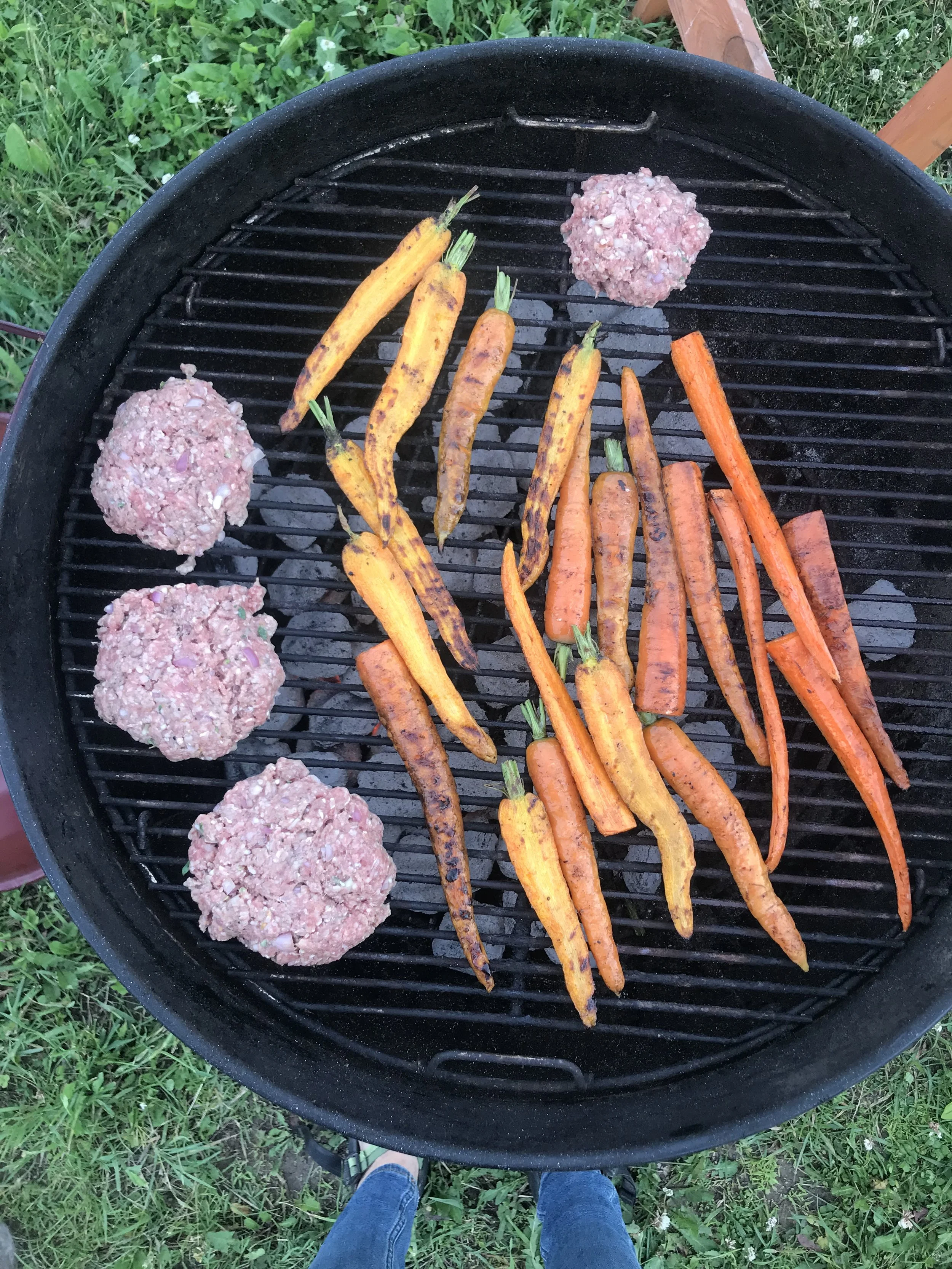
We raise hair sheep (katahdin and dorper, to be specific). Our customers rave about the meat quality and mild flavor of our 100% grass fed lamb. We have selected breeds that do well on our pastures and in our climate.
You can be assured that our lambs are never fed grain, administered antibiotics or any other funky stuff.
ROTATIONALLY GRAZED
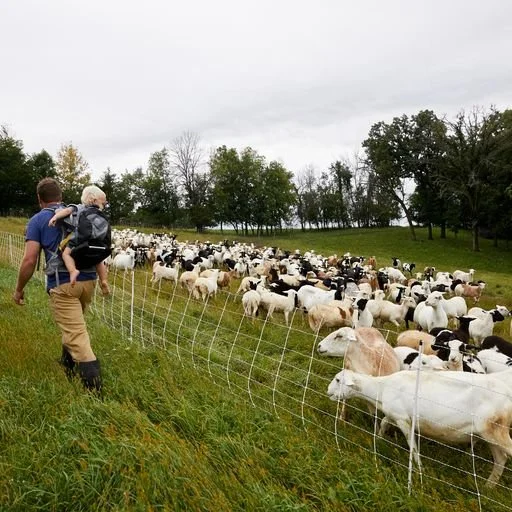
During grazing season we move our sheep to fresh pasture every. single. day using portable electric fence. Frequent pasture rotations are good for the health of our animals and the health of our land. We allow our pastures to rest for at least 5 weeks (usually 6!) before bringing the sheep back to the same area to graze.

REGENERATIVE PRACTICES
We protect our soil and water by keeping our farm in perennial vegetation. Our deep rooted pasture grasses keep our soils in place and draw moisture down into the earth. Through grazing we are able to transform the rough parts of our hilly farm into delicious food for our community.
We’ve been raising sheep for over 10 years and continue to learn about better ways of managing our flock in harmony with our land.
LIFETIME GRAZED
We have a flock of 140 ewes who live on the farm year-round and have their lambs on pasture throughout the month of May.
In the winter we "bale graze" our sheep in a field that needs a boost of fertility. Bale grazing means we have round bales and bale rings placed throughout the pasture. The hay, bedding and manure that's left behind after a winter of grazing adds an awesome amount of organic matter and fertility to our soil! Nutrient cycling at it’s best!